
Does renters insurance cover theft?
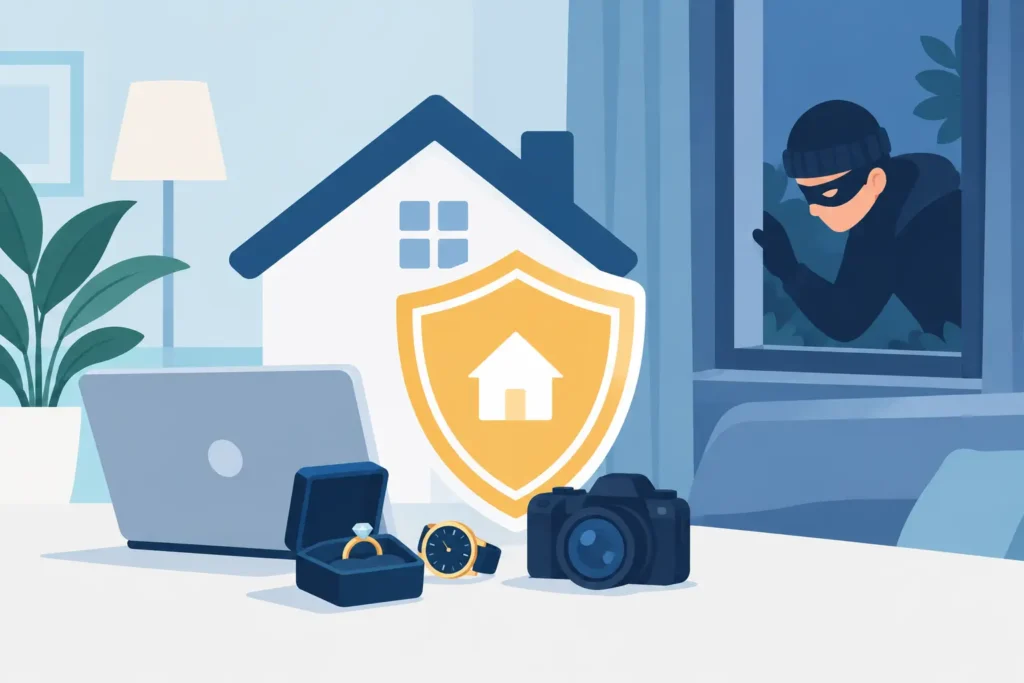
A broken door lock, an emptied bedroom drawer, or a missing laptop from your car can turn an ordinary day upside down. The short answer to “does renters insurance cover theft” is usually yes: a standard renters policy commonly covers your personal belongings when they are stolen. But the amount you can receive, the places where coverage applies, and the items that qualify all depend on your specific policy.
That is why renters insurance is more than a low-cost add-on to your lease. It can help you replace the things that make your home work, from clothes and furniture to electronics and kitchen basics, after a covered loss. Making a smart move means knowing where the coverage helps and where you may need more protection.
What theft coverage usually includes
Renters insurance is designed to protect your personal property, not the building itself. Your landlord’s insurance typically covers the structure, such as the roof, walls, and built-in fixtures. Your policy can help with belongings you own inside the rental.
If someone steals covered property from your apartment, rental home, dorm room, or other insured residence, you may be able to file a claim. Common examples include a stolen television, clothing, furniture, tablet, bicycle, small appliances, or personal documents that must be replaced.
Theft coverage may also follow your belongings away from home. For example, your renters policy could help if a bag is stolen from a hotel room while traveling or if a laptop is taken from your locked car. This is often called off-premises coverage.
There is a trade-off, though. Off-premises coverage may have a lower limit than the amount available for belongings kept at your home. Some policies limit it to a percentage of your personal property coverage. The details matter, especially if you travel often, commute with expensive equipment, or keep valuables in your vehicle.
Your deductible comes out first
A deductible is the amount you pay out of pocket before your insurance begins paying on a covered claim. If you have a $500 deductible and $1,500 in covered belongings are stolen, the claim payment may be around $1,000, subject to your policy limits and valuation method.
For a smaller theft loss, filing a claim may not make financial sense once the deductible is considered. For a larger loss, renters insurance can make a significant difference when you need to replace several items at once.
Before choosing a policy, think about what you could comfortably pay after a loss. A higher deductible may reduce your premium, but it also means taking on more of the immediate cost if theft occurs.
Replacement cost vs. actual cash value
Two renters policies can have the same personal property limit but pay claims very differently. The key question is whether your belongings are covered at actual cash value or replacement cost.
Actual cash value coverage generally pays what an item was worth at the time it was stolen. Depreciation is factored in. A five-year-old laptop that cost $1,000 new may be worth far less on a claim.
Replacement cost coverage is intended to help pay for a new, comparable item, up to your coverage limits. It often costs more, but it can be easier to recover after a major theft because replacing used belongings at today’s prices adds up quickly.
Read the policy language carefully. Some replacement cost claims are paid in stages: an initial payment based on actual cash value, followed by additional reimbursement after you replace the item and provide proof of purchase.
Items with special limits
Most renters policies place special limits on certain categories of property. These limits can be much lower than the total personal property limit on your policy.
Cash, jewelry, watches, firearms, collectibles, fine art, furs, and some electronics may have limited theft coverage. A policy with $30,000 in personal property protection, for example, might still cap jewelry theft coverage at a much smaller amount. Business property may also have lower limits, particularly when it is used away from your residence.
If you own an engagement ring, valuable tools, professional camera gear, firearms, or a collection that would be expensive to replace, ask about scheduled personal property coverage. Scheduling an item usually means listing it separately with an agreed or appraised value. It can provide broader protection and may have no deductible, depending on the policy.
This is one area where a quick conversation can prevent an unpleasant surprise later. Do not assume a high overall coverage limit automatically protects every valuable item you own.
When theft might not be covered
Theft coverage is helpful, but it is not a blank check. Claims can be denied or limited when an exclusion applies, documentation is missing, or the loss does not meet the policy’s definition of theft.
A roommate taking your property can be complicated. Most renters policies cover only the named insured and certain household family members, not every person who shares the lease. In many cases, each unrelated roommate needs a separate renters policy. A shared policy can create confusion about ownership, coverage limits, and who receives claim payments.
Property stolen from a vehicle may be covered under renters insurance, but damage to the vehicle itself is generally handled through auto insurance, if you carry the right coverage. If someone breaks a car window and takes a backpack, the broken window and the backpack may fall under two different policies.
Intentional loss, fraud, and certain unexplained disappearances may not be covered. Some policies also have restrictions for property kept at another residence, in storage, or at a location used primarily for business. The answer depends on the policy and the facts of the loss.
What to do after a theft
Your first step should be safety. If someone may still be nearby or there is an immediate threat, contact emergency services. Once you are safe, file a police report as soon as possible. Insurers often require one for a theft claim, and the report creates an official record of what happened.
Next, take photos or video of damage, such as a forced-open door, broken window, or disturbed room. Make a list of missing items with as much detail as you can remember: brand, model, serial number, purchase date, estimated value, and where you bought it. Receipts, photos, product boxes, email confirmations, and bank statements can all help support your claim.
Notify your landlord or property manager about damage to the rental. Then contact your insurance agent or carrier to start the claim process. Be honest and specific, but avoid throwing away damaged property or making permanent repairs until you understand what the adjuster needs to inspect or document.
Keep notes on every conversation, including the date, claim number, and the name of the person you spoke with. If temporary repairs are needed to secure the property, save the receipts.
How much renters insurance should you carry?
The right amount starts with a realistic inventory of what you own. Walk through each room and estimate the cost to replace everything, not just your biggest purchases. Sofas, beds, cookware, shoes, clothing, electronics, tools, and children’s items can total far more than most renters expect.
A phone video of each room can be a practical starting point. Open closets and drawers, record serial numbers where possible, and save the video somewhere other than the device itself. Update the inventory after major purchases, moves, or life changes.
Also consider liability coverage and additional living expense coverage. Theft is only one reason renters insurance can help. If a covered event makes your rental unlivable, additional living expense coverage may help with eligible temporary housing and related costs. Liability coverage can help if you are legally responsible for certain injuries or property damage to others.
Make a smart move before a loss happens
The best time to review theft coverage is before you need it. Check your personal property limit, deductible, off-premises limit, and special limits for valuables. If the policy language feels confusing, ask for it in plain English – and in Spanish if that is more comfortable for you.
Farpon Insurance can compare renters policy options from multiple carriers and explain the pros, cons, and costs without making you shop company by company. A renters policy should fit the belongings you have, the budget you need, and the life you actually live.
A theft claim is stressful enough. Knowing what your policy is built to cover can help you act quickly, protect your finances, and get back to feeling at home.