
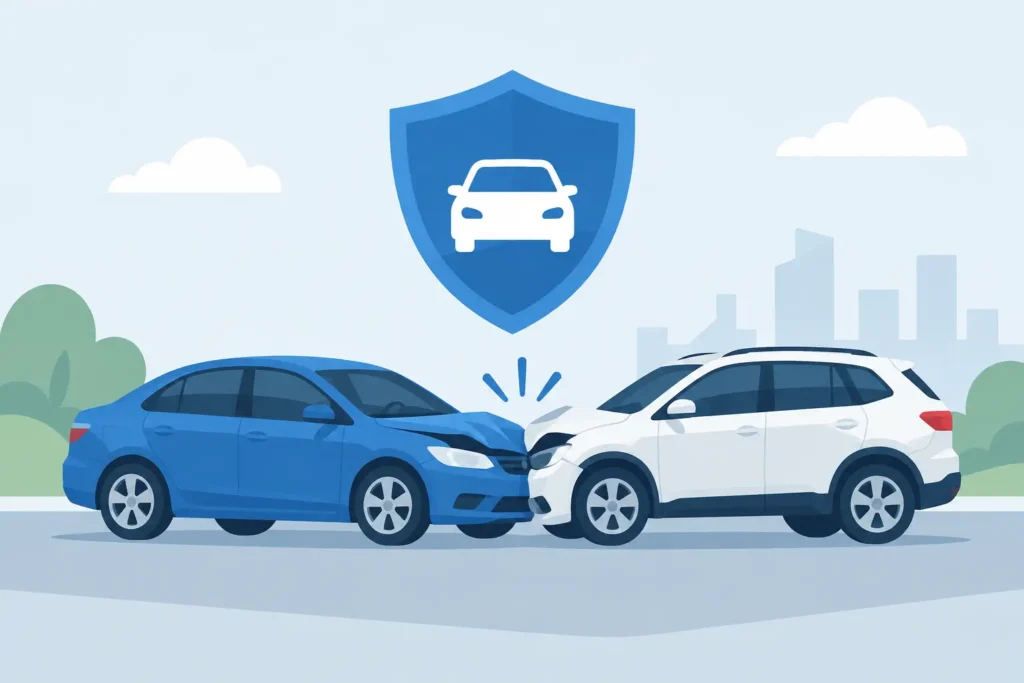
A cracked bumper after a parking-lot mishap is frustrating. A vehicle stolen from a driveway or damaged by a hailstorm can be worse. Collision comprehensive insurance is the part of an auto policy that can help pay for damage to your own vehicle in situations like these, rather than only paying for damage you cause to someone else.
The names often get grouped together, but collision and comprehensive are two separate coverages. Knowing the difference helps you avoid paying for protection you do not need, or finding out too late that a loss falls outside your policy. Make a smart move by looking at the car you drive, what it is worth, how you use it, and what you could comfortably pay after an accident.
Collision Comprehensive Insurance Explained
Liability coverage is designed to pay for injuries or property damage you cause to others in a covered accident. Collision and comprehensive coverage are different: they are designed to help protect your vehicle.
Collision coverage generally applies when your vehicle hits another vehicle or object, or when it rolls over. This can include backing into a pole, striking a guardrail, or being involved in an accident where you are at fault. It may also apply when another driver hits you but does not have enough insurance to cover your repairs, depending on the details of the claim and your policy.
Comprehensive coverage, sometimes called other-than-collision coverage, generally applies when damage comes from something besides a crash. Think hail, wind, flood, fire, theft, vandalism, falling objects, animal strikes, or a broken windshield. In El Paso and across Texas and New Mexico, weather can change quickly, so hail and wind damage are not theoretical risks.
Neither coverage is a replacement for liability insurance. They work alongside it. A full-coverage auto policy often includes liability, collision, comprehensive, and may include uninsured or underinsured motorist coverage, medical payments coverage, or personal injury protection, depending on the state and policy choices.
What collision may pay for
If you rear-end another vehicle, slide into a curb, or hit a parked car, collision coverage can help pay to repair your vehicle after you meet your deductible. If repair costs exceed the vehicle’s value, the insurer may declare it a total loss and pay its actual cash value, subject to your policy terms.
Actual cash value matters. Insurance does not usually pay the price of a brand-new replacement vehicle simply because your car is totaled. The payment is generally based on the vehicle’s market value immediately before the loss, adjusted for factors such as age, condition, mileage, options, and local market data.
What comprehensive may pay for
Comprehensive coverage can help when a deer runs into your vehicle, a storm breaks your glass, or a thief steals the car. It can also help with certain water, fire, and vandalism losses. Coverage is subject to policy terms, deductibles, and exclusions.
A common point of confusion: hitting an animal is usually comprehensive, while swerving to avoid that animal and striking a tree is usually collision. The result may feel similar, but the coverage category and deductible can be different.
What These Coverages Do Not Automatically Cover
Collision and comprehensive are valuable, but they do not pay for every problem involving a vehicle. Normal wear and tear, mechanical breakdowns, routine maintenance, and tire replacement from ordinary use are generally not covered. A failed transmission is not the same as accident damage.
They also do not automatically cover personal belongings inside the vehicle. If tools, electronics, or other property are stolen from your car, coverage may come from a homeowners or renters policy instead, subject to that policy’s deductible and limits. Business equipment can require a separate discussion, especially for contractors and business owners.
Rental car reimbursement and roadside assistance are usually optional coverages. If you depend on your car for work, school drop-offs, or medical appointments, those options may be worth considering. They are not automatically included just because you carry collision and comprehensive.
Choosing a Deductible That Makes Sense
Your deductible is the amount you pay out of pocket on a covered claim before the insurance payment begins. For example, with a $1,000 collision deductible and $4,000 in covered repairs, the insurer would generally pay $3,000.
A higher deductible often lowers the premium. That can be useful for a driver who has savings set aside and wants to reduce monthly insurance costs. A lower deductible usually costs more in premium but can reduce the financial hit after a loss.
There is no single best deductible. The right choice is the one you could pay without putting your household budget under serious pressure. A low premium is not much comfort if the deductible is too high to use when your vehicle needs repairs.
Glass coverage deserves a closer look as well. Some policies offer special glass deductible options or separate glass coverage. Windshield damage can be common in desert and highway driving, but the details vary by carrier and policy. Ask before assuming a chip or crack will be repaired with no out-of-pocket cost.
Should You Carry Collision and Comprehensive?
If you finance or lease your vehicle, your lender or leasing company will usually require both collision and comprehensive. The lender has a financial interest in the vehicle and wants it protected until the loan or lease is satisfied.
If you own your vehicle outright, the choice becomes more personal. Start with the vehicle’s value and compare it with the annual cost of collision and comprehensive, including the deductible. Paying several hundred dollars a year for coverage on a vehicle with little remaining value may not make financial sense for every driver.
Still, value is not the only factor. Ask whether you could replace the vehicle quickly if it were totaled, stolen, or heavily damaged by hail. A paid-off vehicle may be inexpensive on paper but essential to getting to work. For many families, keeping comprehensive coverage on that vehicle can still be a practical decision.
Consider how and where you drive, too. Long commutes, crowded parking lots, rural roads with wildlife, exposed parking, and severe-weather areas can change the risk. The goal is not to buy every available option. It is to choose protection that matches the financial loss you would actually face.
How a Claim Usually Works
After an accident or covered loss, prioritize safety. Move to a safe location if possible, call emergency services when needed, and document the scene with photos. Exchange information after a crash and report theft or vandalism to law enforcement when appropriate.
Then notify your insurer promptly. An adjuster may inspect the vehicle, review photos, estimate repairs, and explain the next steps. You can ask questions about repair shops, rental reimbursement, supplements if additional damage is found, and how the deductible will be handled.
Do not delay reporting because you are unsure whether the damage is worth claiming. You can gather information first. Keep in mind, though, that a claim payment can affect future premiums, and small repairs may be better handled out of pocket. The answer depends on the repair estimate, your deductible, your claim history, and the insurer’s rating approach.
Get Clear Options Before You Choose
Auto insurance should not feel like a test full of fine print. A good conversation starts with your vehicle, your budget, your driving routine, and the protection that would matter most after a loss. Then you can compare deductible choices, coverage limits, and carrier options with the trade-offs stated plainly.
Farpon Insurance can compare options from multiple carriers and explain what is included, what is optional, and where a lower price may mean a higher out-of-pocket risk. Con Orgullo Hablamos Español.
Before your next renewal, take one minute to ask yourself a practical question: if your vehicle were damaged tonight, stolen tomorrow, or totaled next month, would your current policy give you a workable path forward? That answer is a strong place to begin.