
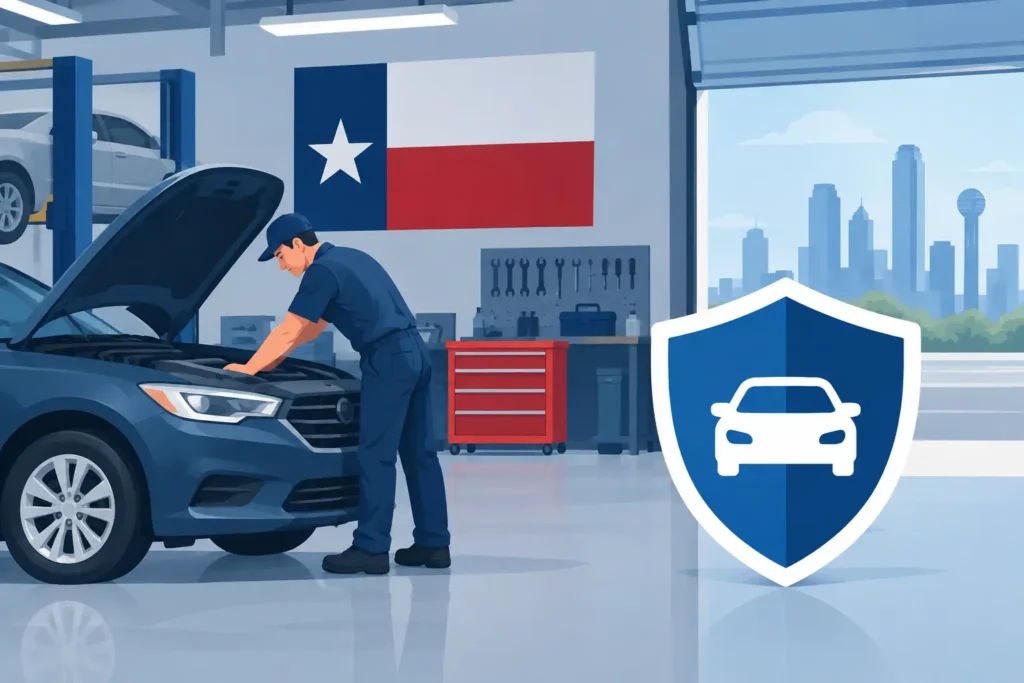
A customer leaves a pickup at your shop for brake work. Overnight, a hailstorm damages the hood and windshield. Or a technician backs a vehicle into a bay door during a busy afternoon. Garagekeepers insurance is designed for moments like these, when a customer’s vehicle is in your care and a covered loss creates an expensive problem.
For Texas and New Mexico repair shops, body shops, detailers, service centers, and towing businesses, customer vehicles may be your biggest day-to-day exposure. General liability is essential, but it may not pay for physical damage to a vehicle you do not own. Understanding where garagekeepers coverage fits can help you make a smart move before a claim puts pressure on your business and customer relationships.
What Garagekeepers Insurance Covers
Garagekeepers insurance protects customers’ autos while they are in your care, custody, or control. That can include vehicles left with you for repair, service, storage, parking, or similar business operations. Coverage is commonly available for losses caused by collision, fire, theft, vandalism, wind, hail, and other comprehensive-type events, depending on the policy you select.
Think about the exposures around a typical shop. A customer’s SUV is damaged during a test drive. A fire spreads through the service area. Someone breaks into a fenced lot and steals a vehicle waiting for parts. A sudden El Paso hailstorm hits cars parked outside. These are the kinds of situations garagekeepers coverage is built to address.
The exact protection depends on the form and endorsements in your policy. Some policies cover a broader range of physical damage causes, while others have more limited protection. Deductibles apply, and your coverage limits matter just as much as the types of loss listed on the policy.
Legal Liability vs. Direct Primary Coverage
This is one of the most important choices to discuss with an agent.
Legal liability garagekeepers coverage generally responds when your business is legally responsible for the damage. If your employee causes a collision while moving a customer’s car, for example, that may be a liability-based loss. But if a hailstorm damages vehicles in your lot and your business was not negligent, legal liability coverage may not respond.
Direct primary garagekeepers coverage can offer broader protection because it may pay for covered damage to customer vehicles regardless of whether your business was at fault. This can be especially valuable for operations that keep vehicles overnight, store cars outdoors, or handle a high volume of customer autos.
Direct primary coverage usually costs more, and that trade-off can be worthwhile or unnecessary depending on your operation. A small repair business that only holds a few vehicles during the day has different needs than a body shop with a packed lot, an impound operation, or a towing company storing vehicles for several days.
Who Should Consider Garagekeepers Insurance?
If customers regularly hand over keys and leave vehicles on your property or under your control, this coverage deserves a close look. It is common for auto repair and body shops, tire and oil-change businesses, dealerships with service departments, mechanics, detailers, valet operations, parking facilities, car washes, towing companies, and vehicle storage businesses.
The label of your business does not tell the whole story. What matters is what happens to the vehicle once it arrives. Do you road-test vehicles? Park them outside overnight? Move them between bays? Hold them while waiting for approval or parts? Pick up or tow customer vehicles? Each answer can affect the coverage, limits, and endorsements you need.
A mobile mechanic who works only at the customer’s location may have a different exposure than a shop with a secure lot. Likewise, a business that performs service work but never takes possession of a customer’s vehicle may not need the same garagekeepers setup. The details matter, which is why a quick quote based only on your business type can leave gaps.
What Garagekeepers Coverage Does Not Replace
Garagekeepers insurance is not a complete business insurance package. It is one important part of protecting a garage-related business.
It generally does not replace commercial general liability, which can help with third-party bodily injury or property damage claims unrelated to customer vehicles in your care. It also does not replace commercial property coverage for your building, tools, lifts, inventory, office equipment, or parts. If a fire damages your shop and customer cars, you may need both property coverage and garagekeepers coverage for the full loss.
You may also need garage liability coverage for accidents arising from your business operations, commercial auto coverage for owned vehicles, workers’ compensation for employee injuries, and business income coverage if a covered loss forces your shop to pause operations. The right mix depends on your services, vehicles, payroll, property, and contracts.
Customer belongings inside a vehicle can be another gray area. Personal property left in a car may be subject to exclusions or separate limits. Do not assume that a vehicle claim automatically includes tools, electronics, packages, or other belongings inside it. Ask for a clear explanation before you bind coverage.
How Much Garagekeepers Insurance Do You Need?
The best limit starts with the maximum value of customer vehicles you could have in your care at one time. Do not base it only on the average car in your lot. One high-value truck, luxury vehicle, classic car, or fleet unit can change the math fast.
Consider your busiest day, not your quietest. Count vehicles inside the shop, in the lot, awaiting parts, scheduled for pickup, and held after hours. Then estimate their total value. If you have room for 20 vehicles and a typical busy-day total could reach $700,000, a much lower limit may leave you paying the difference after a serious loss.
Also review the per-location and per-auto limits. A policy might have enough total coverage for your lot but still limit what it pays for one vehicle. If you occasionally work on specialty vehicles, lifted trucks, luxury models, or commercial fleets, that detail should be part of the conversation.
Deductibles are another practical decision. A higher deductible can reduce premium, but it means more out-of-pocket cost when a customer vehicle is damaged. Choose an amount your business can handle without disrupting payroll, parts purchases, or normal operations.
Questions Worth Asking Before You Buy
Ask whether coverage is legal liability or direct primary, which causes of loss are included, and whether theft, hail, flood, vandalism, and collision are covered. Confirm how limits apply per vehicle and per location, whether vehicles are covered while being road-tested or towed, and what security requirements the carrier expects.
Be honest about your operations. A carrier needs to know if vehicles stay overnight, whether your lot is fenced, how keys are stored, whether employees drive customer vehicles, and if you work on high-value autos. Clear information helps produce a policy that matches your actual risk instead of a policy that looks affordable until a claim happens.
Preventing Claims Still Matters
Insurance helps after a covered loss, but simple processes can reduce the chance of one in the first place. Document a vehicle’s condition when it arrives, including photos of existing damage. Use a controlled key system, limit who can move customer vehicles, and keep lot access organized. When possible, secure vehicles inside or in well-lit, monitored areas after hours.
Train employees on test-drive procedures and backing safety. Make sure customers understand where vehicles will be parked and when keys can be picked up. These habits protect your customers, support your claim documentation, and show that your business takes custody seriously.
If damage does occur, act quickly. Photograph the scene, preserve any camera footage, notify the customer with professionalism, and report the claim promptly. Trying to handle a major loss informally can create more confusion and frustration for everyone involved.
A garagekeepers policy should fit the way your shop actually operates, not just check a box for a lease or contract. Farpon Insurance can compare options from multiple carriers, explain the pros and trade-offs in plain language, and help you choose coverage that lets you focus on the vehicles in your bays. Protecting a customer’s car is also protecting the trust that keeps your business moving.