
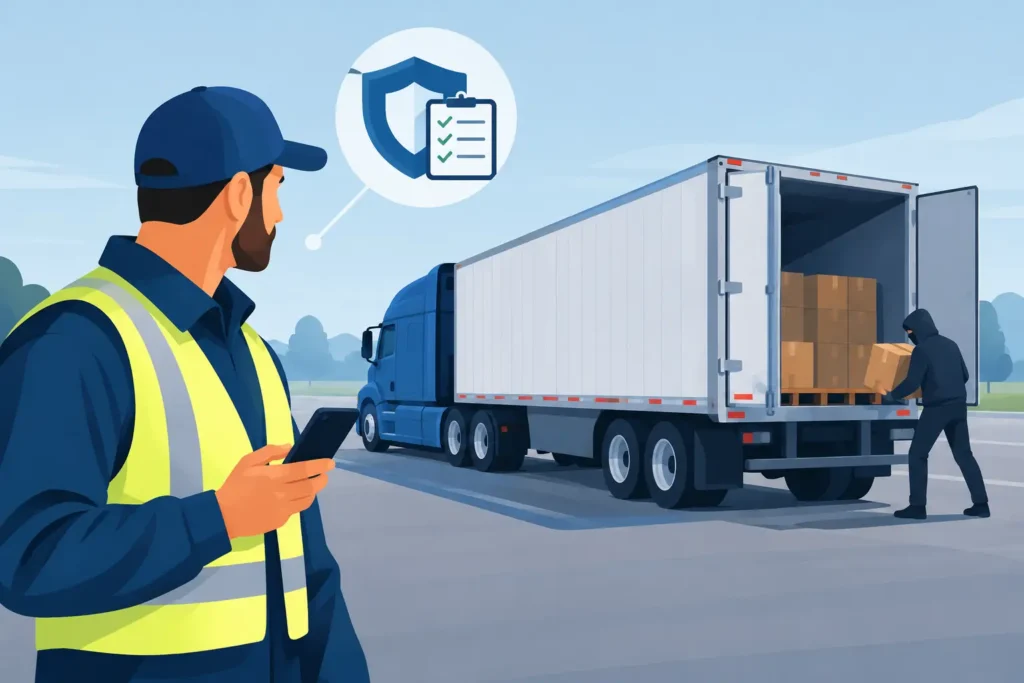
A loaded trailer goes missing from a truck stop, a driver finds a broken seal at delivery, or a receiver reports that part of the shipment never arrived. In each situation, cargo theft claims can quickly become more than a freight problem. They can interrupt cash flow, strain a customer relationship, delay the next load, and put a small trucking operation under real pressure.
The hours after a loss matter. A fast, organized response can help law enforcement investigate, preserve the evidence an insurer may need, and give your business a clearer path forward. The goal is not to guess what happened or promise a customer that every dollar will be paid. It is to document the facts, protect the remaining cargo, and get the claim moving.
What to Do Right After Cargo Theft
Start with safety. If theft is in progress, if a driver feels threatened, or if the vehicle has been taken, call 911. Do not confront suspected thieves or try to recover a trailer on your own. Cargo can be replaced. Your driver cannot.
Once the immediate danger has passed, notify local law enforcement and obtain a police report number. If the truck, trailer, or shipment crossed state lines, additional reporting may be appropriate depending on the circumstances. Your insurer, broker, shipper, and motor carrier may also have specific notification procedures. Prompt notice is usually required under commercial policies, so waiting until all details are known can create unnecessary complications.
Take clear photos and video before moving anything when it is safe to do so. Photograph broken locks, cut seals, trailer doors, damage around the ignition, tire marks, discarded packaging, and the load that remains. Record the exact location, date, time, weather conditions, and names of anyone who saw the incident.
Then focus on preventing a larger loss. Move the vehicle and undamaged freight to a secure location if law enforcement allows it. Do not discard damaged packaging, seals, or equipment. Those items may help show how the theft occurred and what property was affected.
Documents That Strengthen Cargo Theft Claims
Insurance carriers evaluate the details of the loss, not just the reported value of the shipment. Good records help establish what was picked up, what was transported, where it was last verified, and what was missing or damaged.
Gather the bill of lading, rate confirmation, dispatch records, load tender, invoices, packing lists, delivery receipts, and any signed proof of pickup or delivery. Save electronic logs, GPS location history, dash camera footage, fuel receipts, parking receipts, toll records, texts, emails, and check-call notes. If the cargo was temperature-sensitive, retain reefer temperature records as well.
It also helps to prepare a short timeline while the facts are fresh. Include when the load was collected, each stop made, where the truck was parked, when the seal was last checked, and when the loss was discovered. Keep the timeline factual. Avoid filling gaps with assumptions or assigning blame before an investigation is complete.
Your customer may ask for updates immediately. Give them accurate information, explain that the incident has been reported, and let them know you are preserving records and working through the proper channels. Clear communication does not guarantee a smooth business conversation, but silence nearly always makes one harder.
Why Coverage Details Matter
Many truckers use the phrase “cargo insurance” as if every policy responds the same way. It does not. Commercial motor truck cargo coverage is designed to address a carrier’s legal liability for cargo in its care, custody, or control, subject to the policy terms. The exact protection depends on the policy, endorsements, covered commodities, limits, deductibles, and exclusions.
A theft loss may be covered in some circumstances, but the answer can depend on where the trailer was parked, whether the equipment was attended, whether required security procedures were followed, and whether the cargo was an approved commodity. High-value electronics, alcohol, pharmaceuticals, tobacco, and certain other goods can carry special limits, restrictions, or exclusions.
There can also be a difference between the shipment’s full invoice value and the amount your policy will pay. Your legal responsibility under the transportation contract, federal rules, bills of lading, and state law can affect the claim. A shipper’s separate cargo policy may be involved too. That does not mean a claim is hopeless. It means the facts, contracts, and coverage must be reviewed carefully instead of relying on a quick assumption.
This is one reason a low premium is not always the best deal. A policy that looks affordable may have a cargo limit that does not match the loads you actually haul. If one trailer of freight could exceed your limit, a serious loss could leave your business paying the difference.
Common Issues That Can Delay a Claim
Claim delays often come from missing information rather than bad intent. A police report with limited details, an unclear inventory of missing goods, or a gap in location records can slow the process. So can waiting too long to notify the carrier or authorizing repairs and disposal before the insurer has had a chance to inspect the damage.
Parking requirements deserve special attention. Some cargo policies include protective safeguards or theft-related conditions. A policy may expect certain loads to be parked in a secured yard, monitored facility, or other approved location. It may set rules for leaving a loaded trailer unattended. Those details are not fine print to ignore – they are part of the coverage conversation before a loss occurs.
Driver practices matter as well. Regular seal checks, secure key handling, fuel-stop planning, approved parking procedures, and dispatch check-ins can reduce opportunities for theft. No procedure eliminates the risk, especially when organized theft groups are involved. But consistent documentation can show that your operation took reasonable steps to protect the shipment.
How to Prepare Before a Theft Happens
The best time to review cargo coverage is before dispatching a high-value load. Look at the maximum value you haul, the commodities you accept, the states and routes you run, and the places drivers typically park. A local operation hauling building materials has different exposures than a long-haul carrier moving electronics through several states.
Ask practical questions about your policy. Does the cargo limit apply per vehicle, per occurrence, or in another way? Are unattended trailer thefts treated differently? Are there commodity restrictions? Does the policy include earned freight, debris removal, refrigeration breakdown, or theft from a terminal? What deductible would your business need to pay after a covered loss?
It depends on your operation, but matching coverage to your real loads is a smart move. If your freight values or contracts have changed since the policy was written, your coverage may need attention too. New customers, new lanes, and new commodities can change your risk faster than an annual renewal date.
Farpon Insurance can compare commercial coverage options from multiple carriers and explain the tradeoffs in plain language, so truckers can make decisions with a clearer view of price, limits, and conditions.
Keep the Process Moving
After you report the loss, stay responsive. Send requested records promptly, keep copies of every document, and write down the date, time, and purpose of important calls. If an adjuster requests an inspection, preserve the vehicle, trailer, and remaining cargo as instructed. If the shipment must be delivered, salvaged, or moved for safety, document why and keep the related receipts.
Cargo theft is disruptive, but an organized response gives your business a better footing. Protect people first, report the incident quickly, save the evidence, and understand what your policy actually says before the next load leaves the yard.