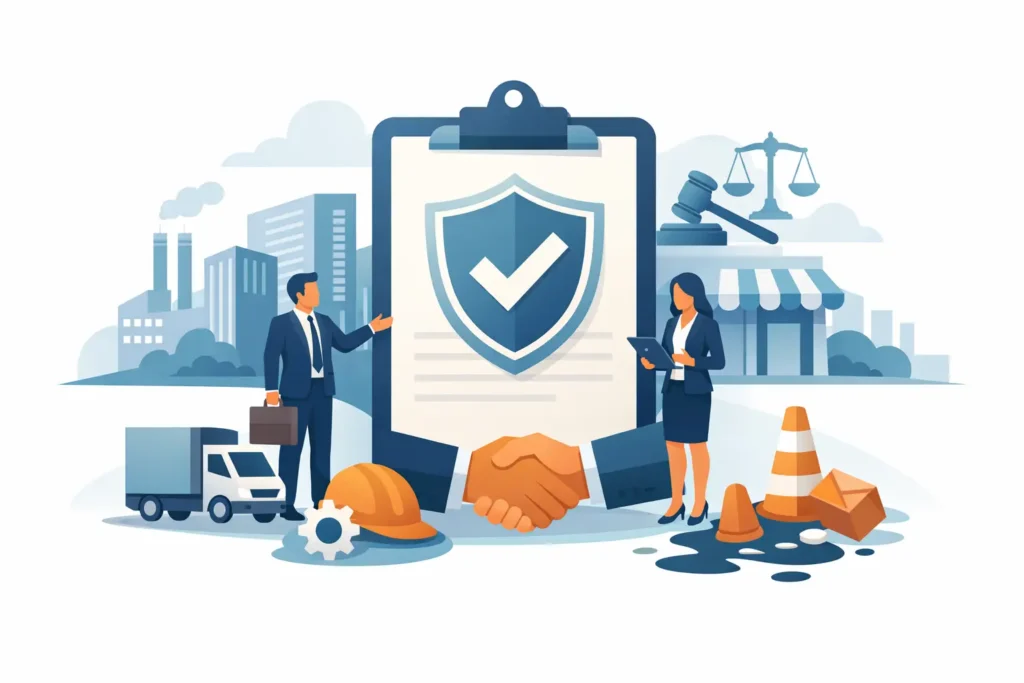
A customer slips on a wet floor in your store. A contractor accidentally damages a client’s window. A delivery driver says your employee backed into their vehicle. These are the moments when business owners ask, what does commercial liability cover? In many cases, it can help protect your business from the cost of claims that you are legally responsible for – but the details of your policy matter.
Commercial liability is often called general liability insurance, although those terms are not always used exactly the same way. It is designed to address certain third-party claims: claims from customers, vendors, visitors, or members of the public who say your business caused them injury, property damage, or another covered loss. It is not a catch-all policy, and it does not replace commercial auto, workers’ compensation, professional liability, or property coverage.
For a small business in El Paso, elsewhere in Texas, or New Mexico, the goal is simple: one unexpected accident should not automatically put your savings, reputation, and daily operations at risk.
What Does Commercial Liability Cover?
A standard commercial general liability policy commonly includes coverage for bodily injury, property damage, personal and advertising injury, and certain medical payments. It may also pay for your legal defense when a covered claim is filed, even if the lawsuit has little merit. That defense feature can matter as much as the settlement itself, because attorney fees and court costs can add up quickly.
Coverage is triggered by the facts of the incident and the language in your policy. Your agent and carrier will review what happened, who was involved, which coverage applies, and whether an exclusion affects the claim. A claim is not automatically covered simply because someone demands payment.
Bodily injury claims
Bodily injury coverage may help when someone outside your business is hurt because of your operations, premises, products, or completed work. Think of a retail customer who falls over a loose floor mat, a visitor who is injured by unsecured inventory, or a homeowner who alleges that a contractor’s work caused an injury.
If the claim is covered, the policy may help pay for damages you legally owe, as well as defense costs. It may also include limited medical payments coverage for minor injuries, depending on the policy. Medical payments can sometimes be available without proving your business was at fault, but the limits are usually modest and the situation must meet policy requirements.
Damage to someone else’s property
Commercial liability can also respond when your business accidentally damages property belonging to someone else. For example, a contractor might crack a client’s countertop while moving equipment, or an employee might damage a customer’s furniture during a service call.
This is third-party property damage. It is different from damage to property your business owns. If a fire, theft, storm, or water leak damages your own tools, inventory, building, or equipment, you generally need commercial property insurance or another specific coverage to address that loss.
Personal and advertising injury
This part of a liability policy is less obvious, but it can be valuable. It may cover certain claims involving offenses such as libel, slander, wrongful eviction, or use of another party’s advertising idea in your advertisement. The exact definitions are narrow, so it is not a general promise to cover every dispute related to social media, marketing, or a bad review.
For example, a claim that your business made a false statement that harmed a competitor could create a legal problem. Whether insurance responds depends on the allegation, the policy wording, and exclusions. Intentional wrongdoing is generally not covered.
Legal defense costs
A lawsuit can be expensive before a judge or jury ever decides who is at fault. For covered claims, commercial liability insurance may provide legal counsel, investigate the allegations, negotiate a settlement, and pay eligible court-related costs.
Policies handle defense costs differently. Some pay defense costs outside the liability limit, while others may reduce the amount left to pay a settlement or judgment. This is one of those details worth reviewing before a claim arrives, especially for businesses with frequent customer contact or larger contracts.
What Commercial Liability Usually Does Not Cover
Knowing the gaps is part of making a smart move. General liability is useful, but it has boundaries. Common exclusions or situations requiring separate coverage include:
- Injuries to your employees while they are working, which are generally handled through workers’ compensation or employers liability coverage.
- Accidents involving company-owned or business-used vehicles, which typically require commercial auto insurance.
- Damage to your own business property, inventory, tools, or equipment, which calls for commercial property coverage.
- Errors in professional advice, designs, consulting, or specialized services, which may require professional liability or errors and omissions coverage.
- Expected, intentional, criminal, or fraudulent acts.
Coverage for faulty workmanship can be especially confusing for contractors. General liability may help with resulting damage to other property, but it usually does not pay simply to redo your own defective work. The answer depends on the contract, the type of work, the damage involved, and the policy form. Contractors should not assume that “general liability” means every job issue is insured.
Your Limits Matter as Much as Your Coverage
Commercial liability policies have limits, which are the maximum amounts the insurer may pay for covered claims. A common setup includes a per-occurrence limit and a general aggregate limit. The per-occurrence limit is generally the most available for one covered event. The aggregate is the most the policy will pay for covered claims during the policy period.
Suppose a business has a $1 million per-occurrence limit and a $2 million aggregate limit. A covered claim could potentially use up to $1 million, subject to policy terms. Multiple claims during the year could reduce the $2 million total. Once the aggregate is exhausted, the business could be responsible for additional costs.
The right limit depends on your operations, revenue, location, contracts, number of customers, and exposure to injuries or property damage. A retail shop, a contractor working at client homes, and a trucking operation do not face the same risks. Some leases, vendor agreements, and project contracts also require specific limits or additional insured endorsements.
Commercial Liability vs. Other Business Coverage
Most businesses need more than one policy because one accident can involve several types of loss. If a business vehicle causes a crash, commercial auto is the policy that generally responds. If an employee is hurt unloading materials, workers’ compensation is usually the starting point. If a storm damages your storefront and forces you to close temporarily, property and business income coverage may be relevant.
A business owners policy, often called a BOP, can package general liability and commercial property coverage for qualifying small businesses. It can be a practical option for retailers, offices, and many service businesses. Still, a BOP may need to be supplemented with commercial auto, cyber liability, professional liability, inland marine coverage for tools and equipment, or a commercial umbrella policy.
An umbrella policy can add an extra layer of liability protection above eligible underlying policies. It is worth discussing when your business has significant assets, high-traffic operations, large contracts, or a risk of severe injury claims.
How to Choose Coverage That Fits Your Business
Start with the real-world situations your business faces. Who enters your premises? Do your employees work at customer locations? Do you use vehicles, subcontractors, expensive equipment, or customer data? Are you signing contracts that require certificates of insurance or additional insured status?
Then look beyond the premium. A lower price may come with lower limits, a narrower policy form, or missing endorsements that matter to your work. On the other hand, paying for coverage you do not need can strain a small-business budget. The best fit is coverage that matches your actual operations and the contracts you must meet.
Farpon Insurance can compare options from multiple carriers, explain the pros and cons in plain language, and help you choose coverage without spending your week calling insurer after insurer. Support is available in English and Spanish, so you can ask questions clearly before you bind a policy.
Before your next job, lease signing, or customer rush, take a few minutes to review your liability limits and exclusions. A clear conversation now can make a difficult claim far more manageable later.