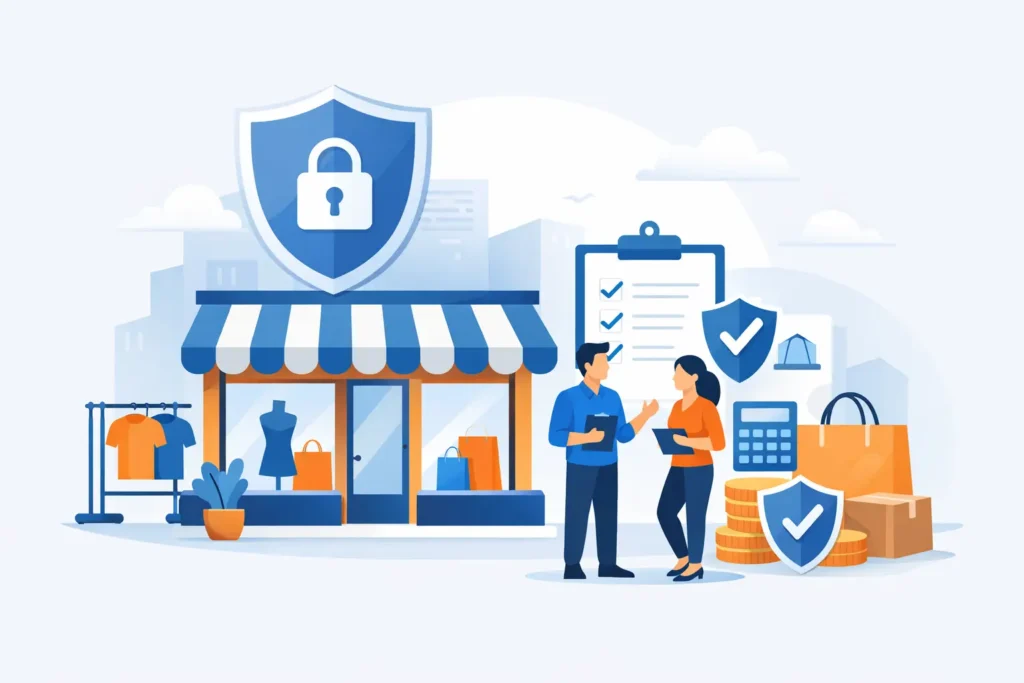
A customer slips near the entrance. A delivery damages a display. A summer storm knocks out power and leaves refrigerated inventory unusable. For a local shop owner, one ordinary business day can turn expensive fast. Retail business insurance helps protect the store, merchandise, people, and income you have worked hard to build.
The right policy is not about buying every coverage available. It is about identifying the risks your store actually faces, understanding what a policy does and does not cover, and choosing limits that make sense for your budget. Whether you operate a boutique in El Paso, a convenience store, a salon with retail products, or an online store with local inventory, a clear plan can help you make a smart move.
What Retail Business Insurance Can Protect
Retail businesses have more moving parts than many owners realize. You may lease a storefront, own expensive point-of-sale equipment, keep seasonal inventory in storage, employ part-time staff, and welcome dozens or hundreds of customers each week. A strong insurance plan can bring those exposures together instead of leaving gaps between separate policies.
Commercial property coverage can help repair or replace business-owned property after a covered event, such as fire, theft, vandalism, or certain weather damage. That can include inventory, shelving, displays, computers, registers, tools, and furniture. If you own the building, the building itself should be included. If you rent, your landlord generally insures the structure, but that does not mean your merchandise and equipment are protected.
General liability coverage helps when your business is accused of causing injury or property damage to someone else. A customer who falls in the store, a child hurt by an unsecured display, or an employee who damages a client’s property during delivery could all create a claim. Liability coverage may also help with legal defense costs, which can add up even when a claim is eventually dismissed.
Business interruption coverage is another piece worth discussing. If a covered loss forces your store to close temporarily, this coverage may help replace lost income and cover certain continuing expenses. The details matter. Coverage usually applies only when the shutdown results from a covered property loss, so a policy should be reviewed carefully rather than assumed to cover every interruption.
Coverage Choices Depend on How You Sell
There is no one-size-fits-all retail policy. A clothing boutique, a smoke shop, a grocery store, and an electronics retailer may all need property and liability protection, but their biggest risks are different.
A store with high-value merchandise may need higher inventory limits and specific protection for theft. A business that sells food or keeps products refrigerated may need to consider spoilage coverage and equipment breakdown. Stores that deliver orders, make pickups, or send employees to events may need commercial auto coverage or hired and non-owned auto protection. If you manufacture, package, re-label, or import products, product liability deserves special attention.
Your lease can also shape the policy. Many commercial landlords require tenants to carry general liability coverage and name the landlord as an additional insured. Some leases require a certain limit, often higher than a small retailer would otherwise choose. Read those requirements before signing a policy so you do not have to make last-minute changes.
For businesses with employees, workers’ compensation should be part of the conversation. Texas does not require most private employers to carry workers’ compensation, but choosing not to carry it has real trade-offs. A workplace injury can still create serious financial and legal exposure. New Mexico has different workers’ compensation requirements, so multi-state businesses should not rely on a Texas-based assumption.
Common Gaps That Can Surprise Store Owners
The lowest-priced quote is not always the least expensive choice over time. A policy can look affordable because it has a high deductible, low limits, narrow causes of loss, or exclusions that do not fit your operation. The goal is not to overinsure. It is to avoid learning about a missing coverage after a loss.
Pay close attention to inventory values. Many owners insure what they paid for current stock without allowing for busy seasons, replacement costs, or a new shipment that has not yet been sold. If your inventory rises sharply before holidays, back-to-school season, or local events, ask whether your limit should change during those months.
Cyber risk is another area that can be overlooked. Retailers handle customer payment information, email accounts, vendor invoices, and digital sales records. A stolen password, fraudulent wire request, ransomware attack, or payment-system breach can interrupt operations and create costs beyond replacing a computer. Cyber liability coverage may be worth considering, especially if you accept online orders or store customer data.
Flood damage is a separate concern. Standard commercial property policies commonly exclude flood, even where heavy rain is a local risk. Water that enters from an overflowing creek, drainage issue, or surface runoff may be treated differently from water damage caused by a burst pipe. That distinction matters in Texas and New Mexico, where severe weather can be unpredictable.
How Much Coverage Does a Retail Store Need?
Start with real numbers, not guesses. Estimate what it would cost to replace your inventory, equipment, furniture, signage, and improvements you made to a leased space. Consider replacement cost rather than the depreciated value of older property whenever possible. Replacing a five-year-old register with a used equivalent may not get your store back to where it was before a loss.
Then look at liability limits. A small shop with light foot traffic may have different needs than a busy store that hosts events, sells products to children, or has a large customer base. An umbrella policy can provide additional liability protection above qualifying underlying policies. It can be a practical option for owners who want higher limits without rebuilding their entire insurance plan.
Your deductible should be an amount the business can reasonably pay after a loss. A higher deductible can lower the premium, but it shifts more of the immediate cost back to you. Keep enough cash available to handle that amount without disrupting payroll, inventory orders, or rent.
Prepare for a Claim Before You Need One
Good insurance works best alongside good recordkeeping. Keep copies of invoices, inventory reports, lease documents, equipment receipts, and photos or videos of the store and stock. Update those records after a remodel, a large inventory purchase, or an equipment upgrade.
If a loss happens, protect people first and take reasonable steps to prevent additional damage. Then document what you see, save receipts for emergency expenses, and report the claim promptly. Do not throw away damaged property until the carrier or adjuster says it is okay, unless it creates a safety hazard.
It also helps to know who will call whom. Employees should understand how to report an incident, where emergency contacts are kept, and how to respond without admitting fault or making promises about payment. A simple written procedure can make a difficult day more manageable.
Get Help Comparing Retail Business Insurance Options
Comparing retail business insurance is more than matching a coverage name to a price. Two quotes may both show general liability and commercial property coverage while offering very different deductibles, sublimits, exclusions, endorsements, and claims service. That is why a conversation about your store is more useful than a quick online form alone.
Farpon Insurance can compare options from multiple carriers, explain the pros and trade-offs in plain language, and help you choose coverage that fits your operation and budget. Local service matters when you need to adjust a policy after adding inventory, hiring staff, moving locations, or opening a second storefront. Con Orgullo Hablamos Español!
Your store deserves more than a policy that sits in a file until something goes wrong. Take a fresh look at what you own, how you operate, and what one unexpected loss could cost. A short review now can leave you better prepared to keep serving your customers tomorrow.