Your pickup may look exactly the same at 8 a.m. as it does at 5 p.m. The difference is what happens between those hours. If you are driving to job sites, hauling tools, making deliveries, transporting clients, or using your vehicle to earn income, commercial auto versus personal insurance is more than a price comparison. It can determine whether a claim is covered when you need help most.
For drivers and business owners in El Paso, across Texas, and in New Mexico, the right answer depends on how the vehicle is used, who drives it, what it carries, and how much risk your work creates. A personal policy can be a great fit for personal life. But personal coverage is not automatically designed to protect a business operation.
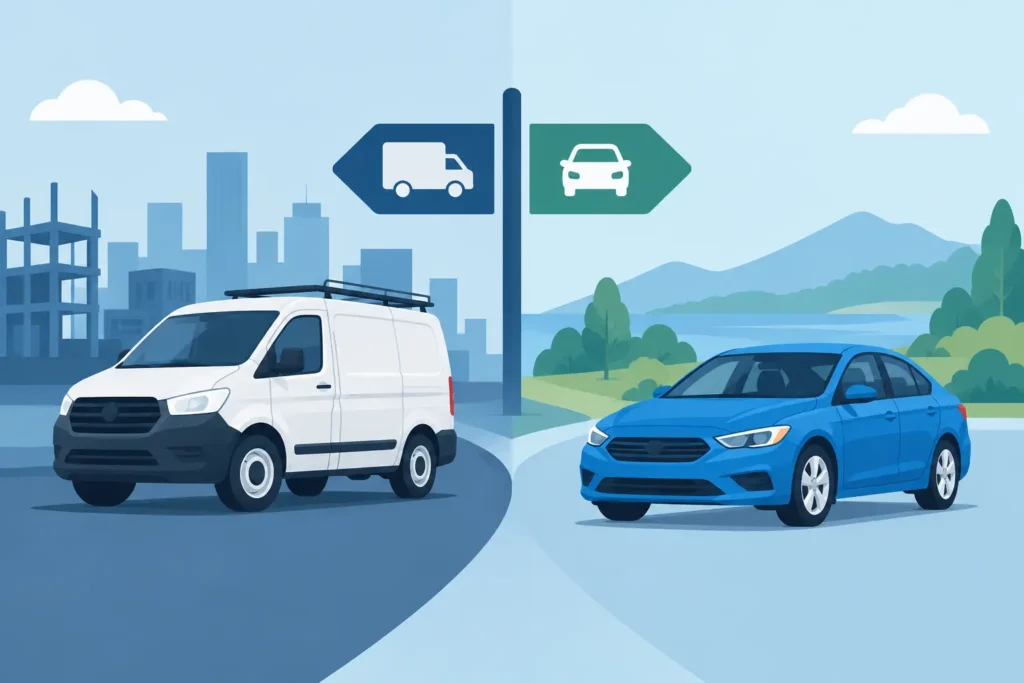
Commercial Auto Versus Personal: The Main Difference
Personal auto insurance is built for everyday driving: commuting to a regular workplace, running errands, taking kids to school, visiting family, and normal recreational use. It generally covers a vehicle owned and driven by an individual or household, subject to the policy’s terms, limits, and exclusions.
Commercial auto insurance is built around business use. It can cover vehicles titled to a business, vehicles used regularly for work, employees behind the wheel, and higher liability exposures that come with operating a business. A contractor’s van full of equipment, a florist’s delivery vehicle, and a truck used by a growing local company may all need commercial coverage for different reasons.
The key point is simple: business use is not always the same as occasional work-related driving. Insurers look at the full picture, not just the name on the title. That is why a quick conversation before you start a new side job, hire a driver, or add a vehicle can prevent a difficult surprise later.
When Personal Auto Coverage May Be Enough
A personal auto policy may be appropriate if you use your vehicle primarily for personal purposes and only commute to one regular job site. For example, an office employee driving their own sedan from home to work typically does not need a commercial policy simply because they are employed.
Some personal policies may also allow limited business use, but the details matter. A real estate professional who occasionally drives to show a home may be treated differently than someone making deliveries all day. A policy might allow one type of use while excluding another. Rideshare, food delivery, package delivery, transporting people for a fee, and carrying business property can all create separate questions.
Do not assume that a vehicle titled in your own name guarantees personal coverage is enough. Likewise, do not assume every trip connected to work requires a commercial policy. The honest answer is that it depends on the vehicle, the work, the miles driven, and the carrier’s rules.
When Commercial Auto Is Usually the Smart Move
Commercial auto often makes sense when the vehicle is part of how your business operates or earns revenue. This is especially common for contractors, truckers, retailers, delivery operations, landscapers, mobile service providers, and businesses with employees who drive.
You should take a closer look at commercial coverage if your vehicle is owned or leased by a business, has permanent business equipment or signage, carries tools or materials, makes deliveries, transports clients or passengers, or is driven by employees. The same is true if you use heavier vehicles, multiple vehicles, trailers, or vehicles that travel long distances across Texas and New Mexico.
A contractor is a good example. Driving a pickup to a job site may sound straightforward, but the risk changes if the truck hauls equipment, pulls a trailer, transports a crew, or is used by more than one worker. A personal policy may not be designed for that exposure. Commercial coverage can be structured around the way the truck actually works for the business.
For truckers and businesses that need specific filings, contracts, or higher limits, commercial auto is often not optional. Customers, general contractors, lenders, and government entities may require proof of certain liability limits before work begins. A lower-cost policy that does not meet the contract requirement is not a bargain.
Coverage Differences That Matter After a Crash
Both personal and commercial policies can include liability, collision, comprehensive, uninsured or underinsured motorist coverage, medical payments, and roadside-related options, depending on the carrier and policy. The bigger difference is often the limits, eligibility, and endorsements available.
Commercial policies may offer higher liability limits because business accidents can create larger claims. If an employee causes a serious crash while driving between job sites, the business could face a claim that reaches beyond a basic personal policy limit. Commercial coverage can also address named and permissive drivers in a way that better fits a company with a team.
There is also a difference between protecting the vehicle and protecting the business. Physical damage coverage can help repair or replace a covered vehicle after a collision, theft, hailstorm, or other covered loss. Liability coverage helps with injuries or property damage you cause to others. Neither should be selected based on price alone. A deductible that looks attractive on a quote may feel very different when several work vehicles need repairs at once.
Keep in mind that tools, inventory, and specialized equipment are not always covered by the auto policy simply because they are inside the vehicle. Those items may need protection through inland marine, equipment, cargo, or another business policy. This is one reason a business insurance review should look beyond the vehicle itself.
The Cost Question: Why Commercial Coverage Can Cost More
Commercial auto insurance can cost more than personal auto insurance, but the higher price is not arbitrary. Carriers consider factors such as vehicle type, business type, driving radius, annual mileage, drivers, claims history, cargo, and the limits your contracts require. A work van making 40 service calls a week faces a different exposure than a personal SUV driven to the grocery store.
That said, commercial insurance is not always dramatically more expensive, and a personal policy is not always the cheaper choice once you compare coverage that truly fits. The goal is not to buy the lowest number on a screen. It is to find protection that can respond to the work you actually do.
A strong agency can help identify ways to manage the cost, such as selecting practical deductibles, reviewing driver records, combining eligible business coverages, and comparing carriers. Farpon Insurance can do the carrier comparison and explain the pros and cons in plain language, so you can make a smart move without spending hours chasing quotes.
Questions to Ask Before You Buy or Renew
Start with the facts, not assumptions. How often is the vehicle used for work? Who drives it? Is it titled personally or to the business? Do you carry tools, materials, products, or passengers? Do you cross state lines? Have customers or contractors asked for a certificate of insurance or higher limits?
Also consider what has changed since your last renewal. A side hustle may have become a regular delivery route. A spouse may now help with the business. One truck may have turned into a small fleet. Insurance should keep up with growth, because yesterday’s personal-use description may not fit today’s operation.
Be upfront about your use. It is never worth trying to make a business vehicle sound personal just to chase a lower premium. If a claim happens, inaccurate information can lead to delays, disputes, or a coverage problem at the worst possible time.
A Better Way to Decide
Bring your current declarations page, vehicle details, and a clear description of your work to the conversation. An agent can compare available options and show you where personal coverage may fit, where commercial coverage is safer, and where other policies may be needed for tools, cargo, or liability.
If you are unsure whether your vehicle has crossed the line from personal transportation to a business asset, ask before the next job, delivery, or renewal. A short review now can help keep one accident from interrupting the business you have worked hard to build.