
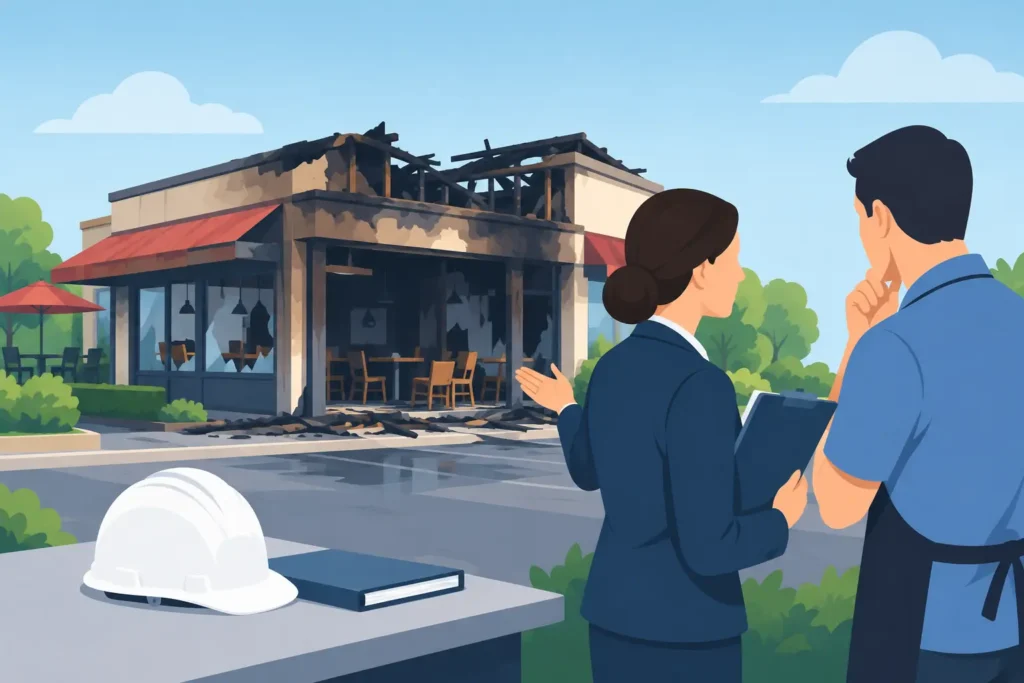
A restaurant fire claim starts long before an adjuster arrives. It starts in the first hours after the fire, when you are trying to protect your people, secure the building, save records, and figure out whether you can serve customers again next week. A kitchen fire can damage far more than a hood system or a grill. Smoke, water, cleanup costs, spoiled inventory, lost income, and payroll can quickly turn one incident into a serious business interruption.
The good news is that a well-handled claim can give your business a clearer path forward. The key is acting quickly, documenting carefully, and understanding which parts of your commercial policy may apply.
What to Do Right After a Restaurant Fire
Your first responsibility is safety. Follow instructions from the fire department, do not re-enter an unsafe building, and get medical attention for anyone who needs it. Once the scene is released, contact your insurance agent or carrier as soon as possible. A prompt report helps start the inspection and recovery process.
Before major cleanup begins, take wide and close-up photos and video of the building, kitchen equipment, dining area, inventory, exterior signage, and any smoke or water damage. Capture the condition of walls, ceilings, floors, refrigeration units, point-of-sale systems, furniture, and food stock. Keep copies of fire reports, invoices, repair estimates, employee schedules, and receipts for emergency expenses.
You also need to protect the property from additional damage. That may mean boarding up broken windows, placing tarps over openings, moving undamaged items to a secure area, or arranging water extraction. Do not throw away damaged equipment or inventory until the carrier or adjuster has had an opportunity to inspect it, unless it creates a health or safety issue. If something must be discarded, photograph it thoroughly and keep a record of what was removed.
For most restaurant owners, these first tasks matter:
- Report the loss to your carrier or agent promptly.
- Document damage before cleaning, repairs, or disposal begin.
- Save every receipt for emergency protection, cleanup, and temporary operations.
- Keep a daily record of closures, canceled events, lost sales, and recovery decisions.
What a Restaurant Fire Claim May Cover
Coverage depends on the policy you purchased, the cause of the fire, deductibles, limits, endorsements, and exclusions. That is why it helps to review your policy with someone who can explain the details in plain language. Still, several coverage areas commonly come into play after a fire.
Building and tenant improvements
If you own the building, commercial property coverage may help pay to repair or replace damaged structural elements, subject to your policy limits. If you lease your space, your landlord may insure the structure, but you may be responsible for improvements you made, such as custom flooring, installed fixtures, built-in bars, or kitchen modifications.
Do not assume the landlord’s policy covers everything inside the restaurant. Your lease should be reviewed carefully, especially the sections addressing fire damage, maintenance responsibilities, and required insurance.
Kitchen equipment, furniture, and business personal property
Ovens, fryers, refrigeration equipment, tables, chairs, smallwares, computers, linens, and inventory may fall under business personal property coverage. Smoke damage can be just as significant as flames, particularly for electronics, upholstery, food products, and ventilation equipment.
One major question is whether your policy pays replacement cost or actual cash value. Replacement cost coverage generally helps replace covered items with new comparable property, while actual cash value factors in depreciation. A ten-year-old refrigerator, for example, may not produce the same claim payment under both options.
Business income and extra expense
For many restaurants, business income coverage becomes the difference between reopening and closing for good. This coverage may help replace lost income while operations are suspended because of covered property damage. It can also help with continuing expenses such as payroll, rent, and certain utilities, depending on policy language and limits.
Extra expense coverage can help with reasonable costs that reduce the shutdown or allow you to operate temporarily. That could include renting equipment, moving to a temporary location, or paying for expedited shipping on replacement items. It does not mean every expense during a closure is automatically covered. The cost generally must be necessary, reasonable, and connected to the covered loss.
Restaurants should keep strong sales records, payroll reports, tax filings, vendor invoices, reservations, catering contracts, and point-of-sale reports. These records help establish what the business would likely have earned if the fire had not occurred.
Food spoilage and ordinance costs
A fire can knock out power or leave food unsafe to serve. Some policies include food spoilage coverage, while others require an endorsement. This is worth checking before a loss happens, particularly if your restaurant carries high-value proteins, specialty ingredients, or large quantities of refrigerated inventory.
Local building codes may also require upgrades during reconstruction. A damaged kitchen may need updated electrical systems, ventilation, fire suppression equipment, or accessibility improvements before reopening. Ordinance or law coverage can be critical here because standard property coverage may not fully pay for costs caused by code enforcement.
Keep the Claim Moving Without Creating Problems
Once your carrier assigns an adjuster, be ready to provide clear documentation and answer questions about the fire, the property, and your operations. Be honest and specific. If you do not know an answer, say so and follow up when you have the information. Guessing at values or timelines can create confusion later.
Make a claim file for all communications. Record the date, the person you spoke with, what was discussed, and any next steps. Save emails, estimates, receipts, photographs, and inventory lists in one location. If your restaurant uses a bookkeeper, manager, contractor, or restoration company, make sure everyone is working from the same information.
You can choose contractors, but confirm the claim process before authorizing major repairs. Emergency mitigation is often necessary, but full reconstruction decisions should be coordinated with the insurer and the building owner when applicable. Ask whether an estimate has been approved, whether permits are needed, and how payments will be issued.
Avoid signing away control without reading the agreement. Restoration contracts, assignment documents, and financing arrangements can carry obligations that are easy to miss during a stressful week. If something is unclear, ask for an explanation before signing.
Plan for the Reopening, Not Just the Repair
A fire claim is not only about restoring walls and replacing equipment. It is about restoring the restaurant’s ability to operate. Your reopening plan should address health department requirements, inspections, equipment testing, staffing, inventory ordering, and customer communication.
Think through the cash-flow gap. Even with business income coverage, payments may take time as documentation is reviewed. Talk with your accountant, landlord, lenders, and key vendors early. Some vendors may be willing to adjust delivery schedules or payment terms while you rebuild. Employees also deserve clear communication about expected schedules and available work.
If part of the restaurant can safely operate, a limited menu, catering model, food truck arrangement, or temporary kitchen may help preserve customer relationships. Whether that makes financial sense depends on the policy, local permits, available equipment, and the cost of operating in a temporary setup. Do not force a quick reopening that creates new safety or compliance problems.
Review Your Coverage Before the Next Inspection
The best time to discover a missing endorsement is not after the fire trucks leave. Restaurant owners should review property limits, business income limits, equipment values, food spoilage coverage, ordinance coverage, and deductibles at least once a year. Expansion, new equipment, higher food costs, remodeling, and increased sales can make an old policy limit less useful than it once was.
An independent agency can compare options from different carriers and explain the tradeoffs between price, limits, and endorsements. Farpon Insurance helps Texas and New Mexico business owners make a smart move by turning complicated coverage choices into clear options.
After a fire, the goal is not to rush through the process. It is to make sound decisions that protect your employees, your customers, and the business you worked hard to build. Keep good records, ask direct questions, and make each recovery decision with the reopening you want in mind.